Note: This article may feature affiliate links, and purchases made may earn us a commission at no extra cost to you. Find out more here.
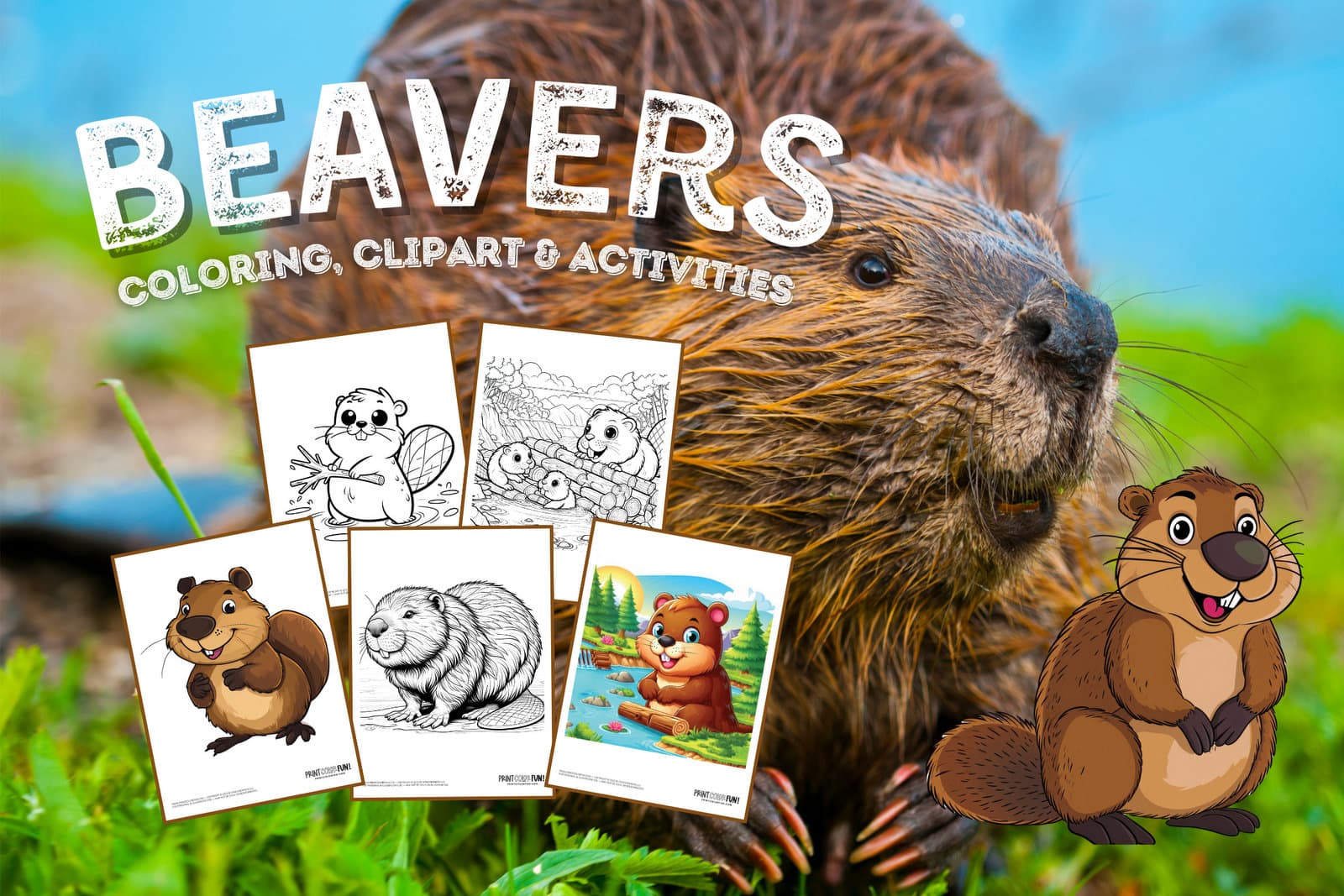
Beaver clipart & beaver coloring pages
Beavers are extraordinary animals known for their ability to build dams, lodges, and canals. These remarkable creatures are the architects of the natural world, playing an important role in their (and our) ecosystems.
Beavers are renowned for their construction skills, using trees, mud, and stones to create dams across streams.
Their sharp teeth allow them to gnaw through wood, which they use both for building and as a food source during winter.
This behavior creates wetlands, which are vital for other wildlife, helping to increase biodiversity.
Family life
Living in family units called colonies, beavers are social animals.
A typical beaver family includes the adult pair, young kits (babies), and the yearlings (year-old children) from the previous season.
They communicate with each other through vocalizations, scents, and tail slaps on the water, which can also serve as warnings of danger.
Adaptations for survival
Beavers have several unique adaptations. For example, their large, flat tails help them steer in water and serve as a prop when they’re sitting upright on land.
Their webbed hind feet are excellent for swimming, and a special membrane covers their eyes underwater, acting like goggles.
Plus, their dense fur keeps them warm and dry in their aquatic environments!
VIDEO: “American Beaver | Awesome Animals”
10 fun facts about beavers
Beavers can stay underwater for up to 15 minutes.
They have orange teeth due to a high concentration of iron, which makes them stronger.
A beaver’s lodge has underwater entrances, making it safe from predators.
Beavers are second only to humans in their ability to manipulate and change their environment.
The largest beaver dam ever recorded was over 2,790 feet long, visible from space.
Baby beavers are called kits.
Beavers use their tails to store fat for the winter.
They have a special gland that produces a waterproofing oil, which they spread over their fur.
A beaver’s teeth never stop growing, chewing on wood helps keep them from getting too long.
Beavers can live up to 24 years in the wild.
Craft ideas
Crafting with your children is a wonderful way to connect with nature and stimulate their imagination. Here are five beaver-themed crafts to enjoy.
Beaver lodge model: Use sticks, mud (or air dry clay), and stones to construct a model of a beaver lodge. This hands-on project helps kids understand how beavers build their homes.
DIY beaver tail bookmark: Craft a bookmark shaped like a beaver’s tail using cardstock and markers. Decorate it to resemble the texture and color of a real beaver tail.
Beaver dam water play: Set up a water play area where kids can build their own beaver dams using sticks, rocks, and mud. It’s a fun way to learn about water flow and ecosystem engineering.
Beaver mask making: Create beaver masks from paper plates, colored paper, and yarn. This activity encourages imaginative play and storytelling.
Log-chewing beaver craft: Using brown pipe cleaners, pom-poms, and toothpicks, children can make their own beaver, complete with a log to chew on. It’s a cute way to discuss beavers’ dietary habits and tooth growth.
Learning activities
Learning about beavers can be both fun and informative. Here are five activities to deepen your child’s understanding of these fascinating animals.
Beaver habitat research project: Research and create a poster about beaver habitats, emphasizing the importance of wetlands. Include pictures, facts, and drawings.
Water flow experiment: Conduct an experiment to show how beaver dams affect water flow. Use a tray, some water, and objects to simulate a dam, and observe how the water’s path changes.
Beaver diet taste test: Explore the diet of a beaver by sampling foods they might eat, such as willow leaves (lettuce as a substitute), bark (cereal), and aquatic plants (seaweed snacks).
Beaver engineering challenge: Challenge your children to build a dam in a stream or bathtub using natural materials. This hands-on activity teaches problem-solving and engineering skills.
Beaver communication game: Imitate beaver communications by creating a game where family members use tail slaps (clapping) and vocalizations to send messages or warnings.
Beaver coloring pages
Beaver clipart with color
Books about beavers
Reading about beavers through stories and informational books is a wonderful way to learn more about nature’s incredible engineers.