Note: This article may feature affiliate links, and purchases made may earn us a commission at no extra cost to you. Find out more here.
Dip your toes into fishing fun with fishing clipart & coloring pages
Ever wondered what lies beneath the gentle ripples of a lake or the vast expanse of the ocean? Join us as we cast our lines into the world of fishing — an activity rich with tradition, patience, and surprise.
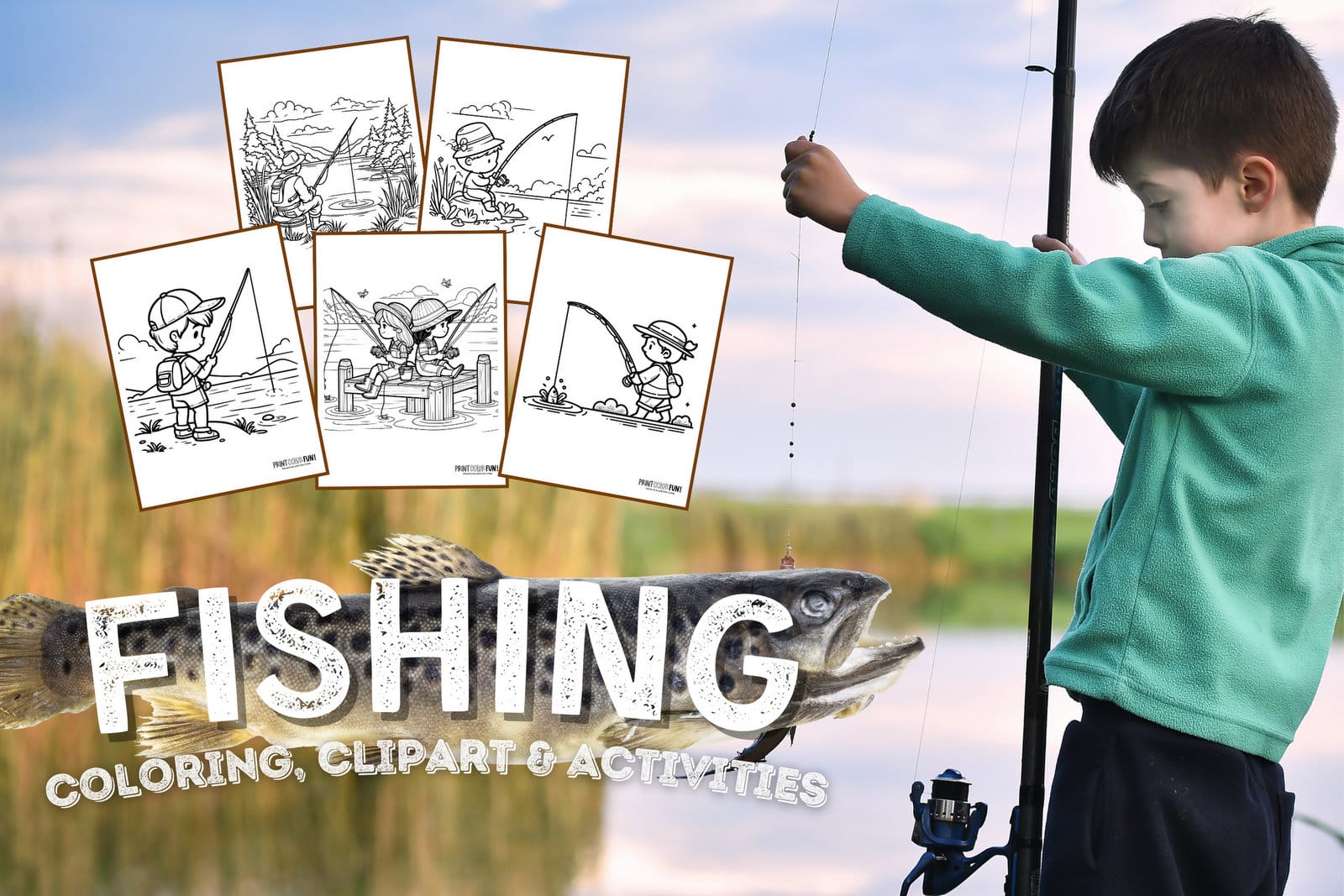
Join us for a dive into the serene art of fishing, tailored for you and your young anglers. With engaging fishing clipart and fishing coloring pages, inventive crafts, and interactive learning activities, we’ll explore the types of fish, fishing techniques, and the aquatic ecosystems that make fishing such an adventure.
Whether you’re a seasoned fisher or just curious about it, these pages and ideas are sure to reel you in with a catch full of knowledge and fun.
Fishing is about spending quality time in nature, learning patience, and understanding the environment.
For many families, fishing trips are a cherished tradition, offering a unique way to bond and enjoy the great outdoors.
Fishing might seem simple, but it’s a skill that involves understanding both the equipment and the aquatic life.
It’s important to explain the basics to your child: different types of fishing rods, the purpose of bait, and the importance of safety near water.
🐠 Types of fishing equipment
Fishing starts with knowing the gear. There are many types of fishing rods, each designed for different kinds of fishing.
Spinning rods are versatile and easy for beginners, while fly fishing rods are specialized for catching trout and salmon using artificial flies.
Bait and lures play a big role too. Bait can be live, like worms or insects, or artificial, designed to mimic the look and movement of fish prey.
Wearing life jackets and maintaining awareness of the surroundings to prevent accidents is an important part of staying safe on the water.
🐠 Types of fishing
Fishing varies depending on the environment and technique. Freshwater fishing involves lakes, rivers, and streams, targeting species like bass, trout, and catfish.
Saltwater fishing occurs in the ocean, aiming for larger species such as tuna, marlin, and sharks.
Then there’s ice fishing, a winter activity where anglers fish through holes in frozen lakes.
Fly fishing is another method, using lightweight lures called flies and a special casting technique.
🐠 VIDEO: “Blippi Goes Fishing!”
10 fun facts about fish
Fish have been on Earth for more than 500 million years.
Catfish have over 27,000 taste buds, while humans have around 10,000.
The fastest fish is the sailfish, capable of swimming up to 68 miles per hour.
Some fish, like sharks, must keep moving to breathe.
Fish communicate through sounds, including clicks, whistles, and even farts.
The largest fish is the whale shark, which can grow up to 60 feet long.
Fish can feel pain and experience stress.
There are over 33,000 known species of fish.
The archerfish hunts by spitting water at insects on plants, knocking them into the water.
Many fish can change sex during their lifetime, a process known as sequential hermaphroditism.
These projects entertain while also reinforcing lessons learned during fishing adventures!
Fish prints: Grab a fish-shaped sponge or stamp, some paint, and paper. Dip the sponge in paint and press it onto the paper to create colorful fish prints. This activity is great for developing motor skills and teaching about different fish species.
DIY fishing game: Create a simple fishing game using a small stick as a rod, a string, and a magnet as the hook. Cut out fish shapes from cardboard, attach paper clips, and let your child ‘fish’ for them. It’s a fun way to practice patience and hand-eye coordination.
Aquatic habitat diorama: Use a shoebox to create a diorama of a fish’s habitat. Include plants, rocks, and fish figures. This craft encourages children to learn about ecosystems and the importance of clean waterways.
Decorate a tackle box: Personalize a small box with stickers, paint, and markers to create a unique tackle box. It’s a practical craft that teaches organization and preparation for fishing trips.
Fishing pole craft: Construct a toy fishing pole from a bamboo stick, yarn, and a homemade fish. This craft provides a safe way for children to practice casting and reeling in their catches.
Fishing learning activities
Integrate fishing into educational activities to make learning fun!
Fish species matching game: Create cards with pictures of different fish on one set and their names on another. Challenge your child to match the fish with their names, introducing them to biodiversity in aquatic life.
Water safety lesson: Discuss the importance of wearing life jackets, staying near adults, and other safety practices near water. Use role-play or a storytelling approach to emphasize these lessons.
Conservation discussion: Talk about why some fish are catch-and-release and the impact of overfishing. Use simple experiments to show the effects of pollution on waterways.
Fishing math: Introduce basic math concepts by counting fish, measuring fish lengths with a ruler, and calculating weights. This activity can be adjusted for different age levels and abilities.
Journaling catches: Encourage your child to keep a journal of their fishing trips, including what they caught, the weather, and any observations about the environment. This activity fosters observation skills and a love for nature.
Fishing coloring pages and line art drawings
Spend a little time out at the lake or river fishing with these kids.
Colorful fishing clipart
Books about fishing
From colorful picture books to engaging non-fiction, there’s a wealth of resources available to inspire young anglers.
Explore these literary waters together, and you might just find your next great adventure waiting on the pages!